

Australia is adopting artificial intelligence at pace. But when it comes to building AI locally, the gap between ambition and reality is becoming harder to ignore.
Most of the AI systems shaping Australian businesses, governments, and institutions today are designed offshore, governed by foreign frameworks, and optimised for global platforms rather than local needs.
The question is no longer whether AI will shape Australia’s future.
It’s whether Australia will remain dependent on Big Tech, or develop real AI capability of its own.
About the guest
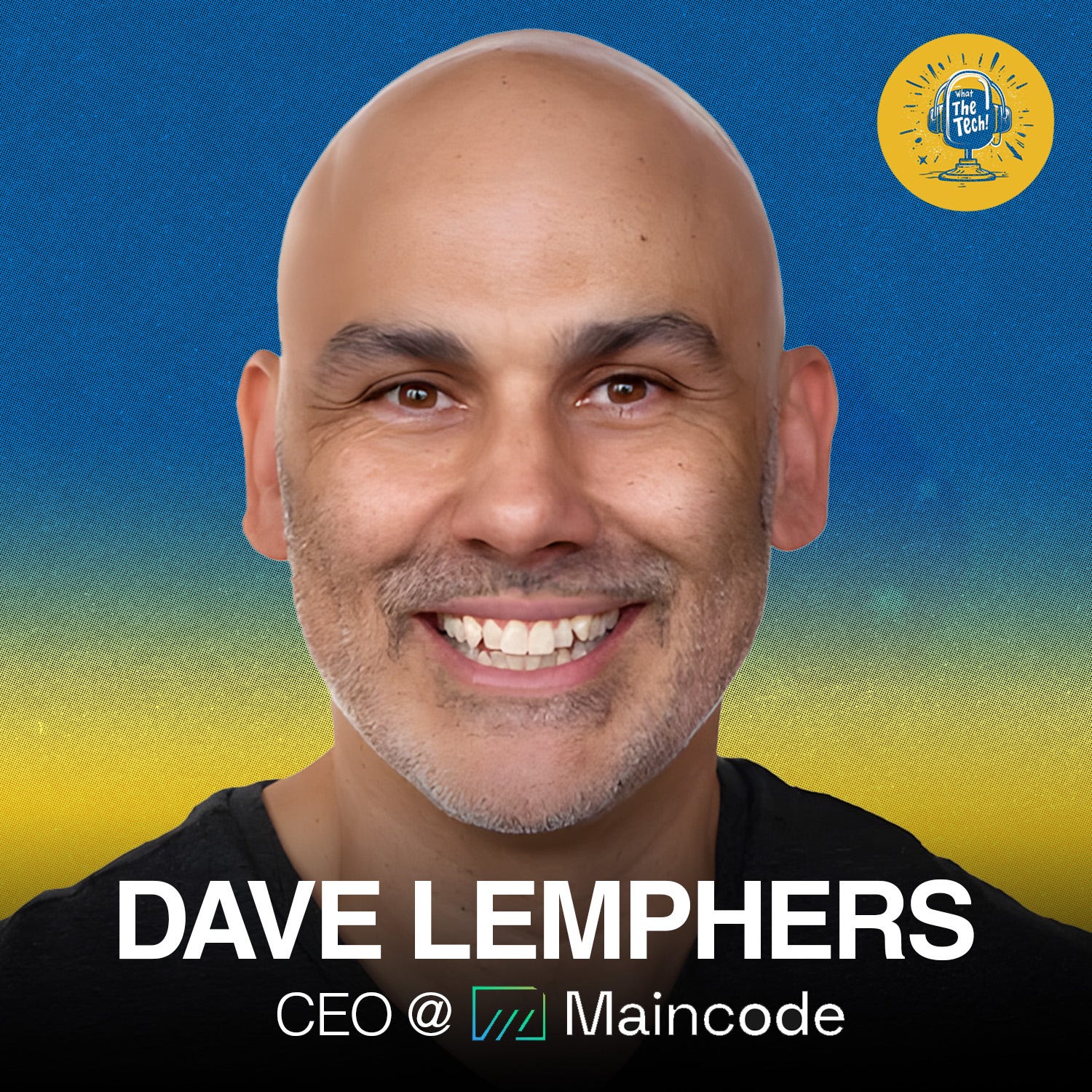
Dave Lemphers is the CEO and co-founder of Maincode, a Melbourne-based artificial intelligence company working across public and private sectors.
Dave specialises in AI engineering, open-source models, and enterprise adoption, with a focus on governance, data sovereignty, and deploying AI systems that organisations can operate responsibly at scale.
Australian-made vs “Sovereign” AI
A key part of the conversation focused on language, particularly the difference between “Sovereign AI” and what Maincode calls Australian-made AI.
Dave explained that after starting with the idea of sovereignty, the team’s thinking evolved once they began building:
“What we quickly realised is sovereign AI as a concept is very narrow, and it’s very difficult. It’s more rhetoric.”
Instead, they focused on something more concrete:
“Australian-made AI is literally what’s written on the can. We’re building in Australia, with Australians… and we want to sell it overseas.”
For Dave, this isn’t about status or symbolism.
“It’s not about publishing research or deploying models for vanity. It’s actually building the foundation for grassroots AI locally for people to work in this industry and contribute globally.”
Introducing AI Model Factory
Dave also spoke candidly about why many organisations hit a wall after early experimentation.
“They start with summarisation and text generation… then they look at their business processes and realise the model can’t actually do the task.”
Fine-tuning alone often isn’t enough.
“An LLM from the very basics cannot do that task because it wasn’t built for it.”
This is where Maincode’s idea of a model factory comes in, not just infrastructure, but the ability to design, train, and operate models end-to-end.
“They don’t really care about GPUs and hard drives. They care about tokens.”
Human-Centred Design
The episode also addressed concerns about jobs and displacement.
Dave pushed back strongly on fear-based narratives:
“Every major technological evolution has had people feel afraid they’re going to be displaced.”
He argued that many of these fears are amplified by large incumbents:
“The doom rhetoric comes from massive technology companies with agendas who need people to feel terrified.”
Maincode’s stated principle is explicit:
“The very first leadership principle we have is ‘for humans’. We think about humans and what’s good for humans.”
The goal is not replacement, but augmentation.
“We don’t want to replace them. We just want to make them better.”
Why this conversation matters now
Australia is at a crossroads.
We can continue consuming AI built elsewhere and adapt our systems around it.
Or we can invest in local capability, even if that path is slower, harder, and more constrained.
Neither option is simple. But avoiding the trade-offs is no longer viable.
Listen to the full episode
🎧 Australia vs Big Tech is now live on:
📬 You can also subscribe here on Substack for episode breakdowns, reflections, and behind-the-scenes thinking.
Question for readers:
Should Australia prioritise building its own AI capability, even if it’s slower, or is relying on Big Tech the pragmatic choice?
Let us know what you think.
Brilliant. It's like Pilates; foundational strength comes from building localy. That 'Australian-made' distinction is so important for AI.