

Companies are investing in AI. Experienced technology professionals are looking for work. Recruiters are still struggling to find the people their clients want.
All three can be true at once.
That tension sits at the centre of our latest episode of What The Tech Podcast (AU). The opportunities are changing, but so are the expectations attached to them. Employers want people who can understand a problem, build a solution and take it far enough that the business can depend on it.
As Ben Davies puts it:
“The expectations are changing much faster than I’ve ever seen in the market before.”
In January 2025, we discussed how to break into the AI job market. This time, we are joined by Ben to explore what has changed — and what that means for people already working in tech.
About the Guest
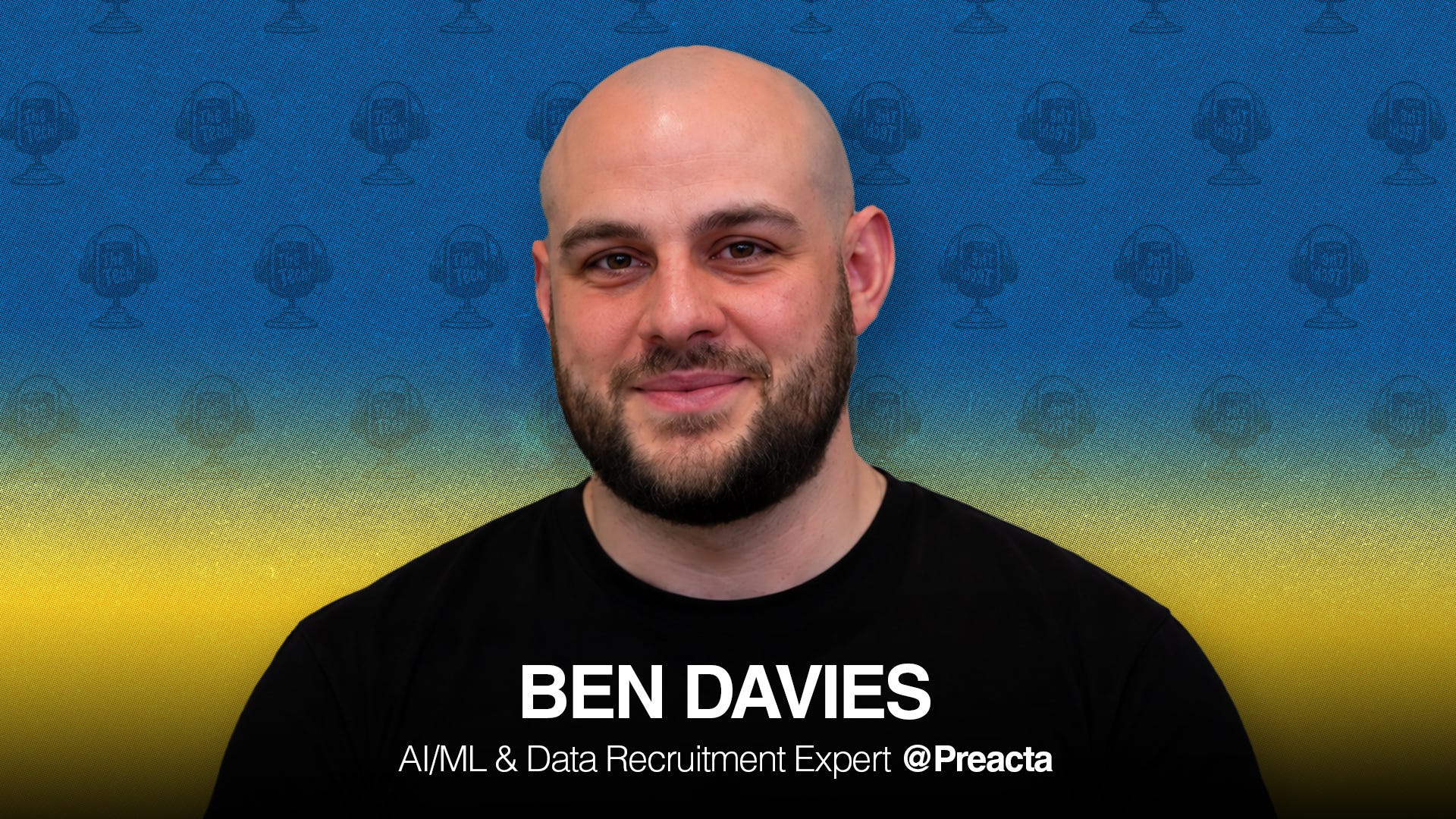
Ben Davies works across AI, machine learning and data recruitment, speaking with companies building AI capability and the candidates hoping to join their teams.
That gives him a useful perspective on the distance between a job description and the person an organisation can realistically hire.
“It’s my job every day to see what the clients want, because I need to bring them what they want.”
He hears which skills clients are asking for, where candidates are struggling to demonstrate their experience, and when an employer’s expectations have outgrown the available talent or budget.
His view of the market comes from those conversations. And increasingly, those conversations are about delivery.
The Job Description Is Getting Bigger
Ben describes a shift towards mature engineering capability as companies move beyond proofs of concept and into production systems.
“At the moment, the steer is heavily engineering led.”
A working demonstration gets attention. Turning it into something reliable introduces a different set of responsibilities: architecture, data, evaluation, security, cost and ongoing operation.
Employers are asking for people who can work across more of that picture.
But there is a practical limit to how much one person can cover. Part of Ben’s work is helping clients distinguish between the capabilities they need and the combination they are unlikely to find in a single candidate.
For job seekers, this is useful context. A long list of requirements may reflect an organisation still working out how to build its team.
For employers, it raises a harder question: have you defined a role that someone can actually do?
What a Forward Deployed Engineer Actually Does
One of the roles we unpack is the forward deployed engineer.
In Ben’s description, this combines technical capability with consultancy, stakeholder engagement and an understanding of how a product can solve a customer’s problem.
“So it’s a tough role because I think it brings technical capability and personality.”
The work begins with understanding what the business is trying to achieve. From there, the engineer needs to assess what is possible, what is worth building and whether the solution makes commercial sense.
That requires someone who can move between a business conversation and an engineering conversation without losing the meaning of either.
We also discuss how widely the title is being used. Similar work can overlap with solutions engineering, integrations, architecture and pre-sales.
The title may help someone get noticed. The responsibilities underneath it tell you much more about the job.
Your Existing Skills May Be the Starting Point
One of the most useful parts of the conversation is Ben’s prediction that AI engineering will become more specialised.
“I think it’s going to be a lot easier for people to upskill in one area, whether that’s like context engineering.”
Today, many companies want someone who can handle the entire system. As the work matures, he expects more opportunities for people focused on particular components, including evaluation and reliability.
That could create pathways for people whose experience already fits part of the problem.
Take quality assurance.
A QA professional spends their time thinking about expected behaviour, failure cases and whether a system does what it is supposed to do. AI evaluation introduces new methods and challenges, but that underlying discipline remains relevant.
The same question applies across software engineering, data platforms and infrastructure: which part of this emerging work builds on something you already understand?
For someone considering a career change, that is a useful place to start.
AI Leadership Comes with Delivery Expectations
The expectations are changing for senior leaders too.
Ben describes roles that require technical depth, the ability to assess engineering talent, stakeholder engagement and a clear understanding of what the organisation will get from its investment.
“They need technical depth because they need to be able to recruit. They need to be able to screen engineers themselves, especially in new industries.”
Cost is part of that responsibility. Experimentation can become expensive quickly, and someone needs to understand the relationship between architecture, usage and budget.
We discuss why leaders need to keep learning about the tools and practices shaping their teams’ work. They need enough understanding to ask useful questions, evaluate proposals and recognise when an approach is unlikely to deliver.
A strategy needs people who can execute it. Those people need direction, support and informed decisions.
Give People Something Concrete to Assess
The practical career advice running through the episode is to make your capabilities visible.
When discussing portfolios and what product people can build with the tools available, Ben makes the point plainly:
“They don’t have to be perfect, but you should be able to present that to a client, say, ‘Look what I built.’”
A project gives you something specific to explain: the problem you chose, the decisions you made, what worked and what you would change.
That applies beyond engineering. Ben encourages candidates to bring an example of how they have used AI to improve a process, even if the project was small.
We also talk about referrals, meetups and professional relationships. Ben describes hiring teams overwhelmed by applications, where a capable candidate can be difficult to distinguish in a crowded inbox.
Meeting people, contributing to conversations and sharing useful work gives others more context about what you can do.
For graduates, those experiences can also build confidence before the interview itself.
Why This Matters Now
When we discuss how experienced technology leaders can move towards more advanced AI roles, Ben’s advice is direct:
“You need to be investing your time.”
That investment can take different forms: learning how a system works, building a small product, exploring a specialisation or understanding a business problem well enough to propose a useful solution.
The conversation offers a more specific way to think about an AI career.
Look at the work companies need done. Understand which problems they are prepared to fund. Identify where your experience helps, and build evidence that you can contribute.
There are opportunities in that shift, alongside real uncertainty and demanding expectations.
Ben’s perspective is a reminder that career decisions deserve the same care as technical ones: understand the problem, examine the options and choose a direction you are willing to keep learning about.
Listen to the Full Episode
In this episode of What The Tech Podcast (AU), we get into:
What is changing in Australia’s AI and technology hiring market
Forward deployed engineers and what sits behind the title
How software, data and QA experience could translate into AI roles
Specialist opportunities in infrastructure, evaluation and reliability
How citizen developers, product teams and engineers work together
What employers expect from senior AI leaders
Projects, portfolios, referrals and professional relationships
What building a product or starting a business can teach you
🎧 Watch or listen now on
📬 Subscribe here on Substack for new episodes and further reflections from our conversations.
Question for Readers
If you were interviewing for your next role tomorrow, what would you show someone to demonstrate how you use AI to solve a real problem?