
Why AI Is Forcing Designers to Think Beyond the Screen (S2E2)

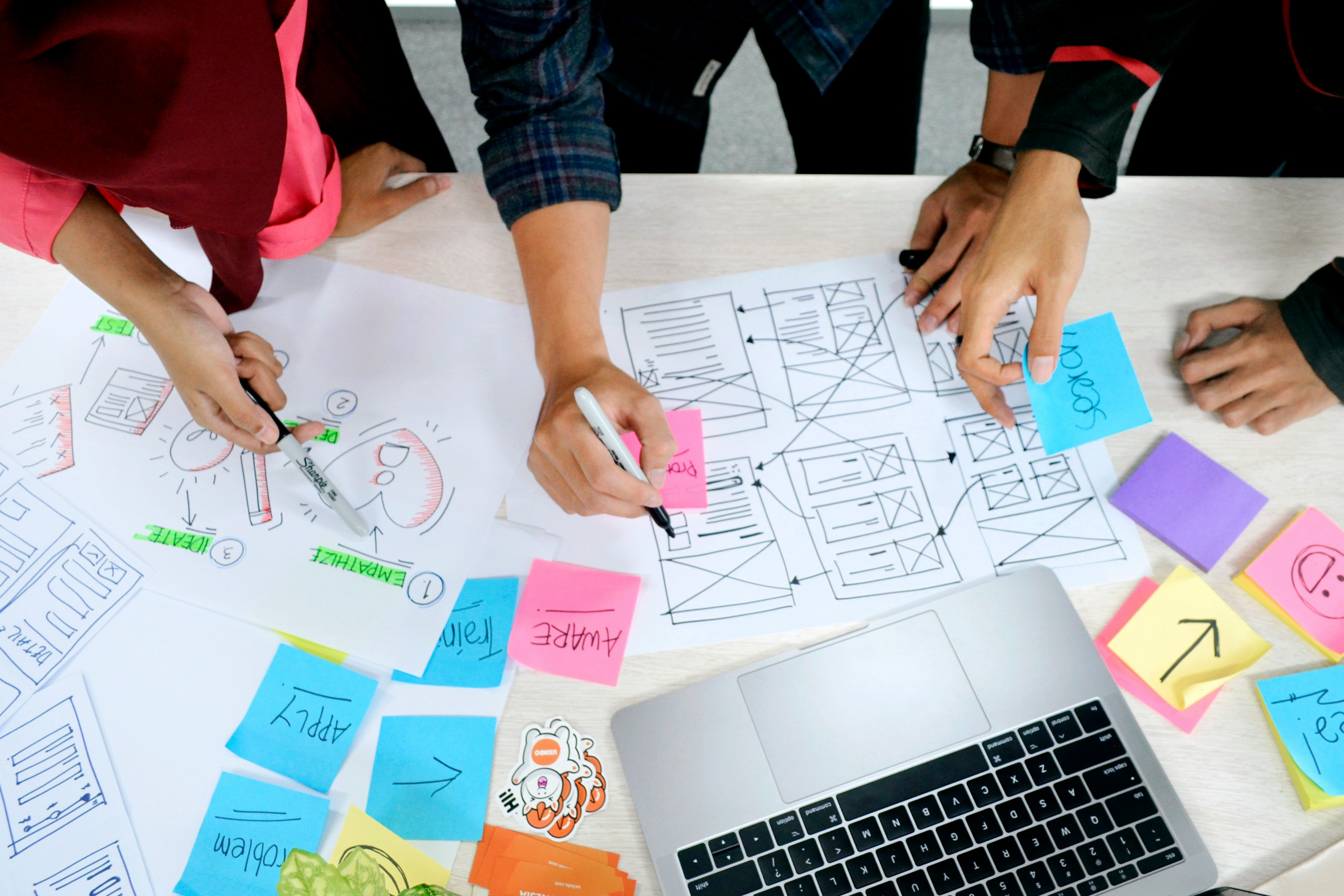
For most of the history of software, product design meant designing visuals.
Designers focused on layouts, typography, colours, navigation patterns and interaction flows. The job was to translate product ideas into interfaces that felt intuitive and usable for real people.
But the rise of AI-powered products is quietly changing that definition.
When artificial intelligence becomes part of the product itself, the design challenge expands far beyond the screen. The interface is no longer the entire experience, it is just the visible layer sitting on top of a much more complex system.
In our recent conversation with Christina (CJ) Jones, Head of Design at Canva AI, we explored how this shift is reshaping the role of designers inside modern product teams.
Design Still Starts With the Problem
One of the first points CJ made during the episode is that AI doesn’t change the fundamental purpose of design.
At its core, design is still about solving a problem.
“Design is getting from the problem that’s at hand to the solution that you need.”
That solution might be an interface, a feature or even something more abstract like communication through visuals or storytelling.
But when AI tools can generate polished outputs quickly, the design process itself can appear less necessary.
Christina described how this perception is increasingly common, particularly among junior designers.
“It looks good enough… so people think they can get it from there.”
The problem is that looking good and solving the right problem are not the same thing.
And that difference becomes more obvious once you start digging into how AI systems actually work.
AI Changes What “The Product” Actually Is
Traditional software behaves predictably.
If a user presses a button, the software executes a predefined action written by engineers.
AI-powered products behave differently.
Behind a simple interface element might sit:
A large language model
prompt engineering
evaluation frameworks
guardrails and safety layers
latency and infrastructure constraints
This means that the experience users interact with is no longer purely visual.
It is the result of a complex system working behind the scenes.
At Canva, CJ explained that designing AI features requires close collaboration across multiple disciplines.
“My team focuses on the AI features… and we actually need to consider the technical limitations of everything we’re building.”
In practice, this means design decisions can’t be made in isolation.
A feature idea might start with designers observing user behaviour, or with engineers experimenting with what a model can do.
“Either the designers have an idea, or the engineers have experimented with something… and then we ask, is it worth putting into the product or not?”
Design becomes a collaborative exploration of what the technology can realistically support.
Designing for Uncertainty
Another important shift with AI products is uncertainty.
Unlike traditional software systems, AI models don’t always produce the same output twice. They may generate incorrect results, hallucinate information or behave inconsistently across languages and contexts.
This means product teams must design not just the feature itself, but how the system behaves when things go wrong.
At Canva, this requires rapid experimentation cycles.
CJ described how teams often work in short development loops where ideas are quickly tested with users.
“We work in a six-week cycle… trying to design the product or build an MVP, getting that in front of users to see if it’s working.”
And sometimes the result of that process is deciding not to ship the feature at all.
“At the end we ask: is it worth putting into production, or is it too slow, costs too much, or the results aren’t great?”
These decisions involve trade-offs between user experience, performance and cost, all of which now influence the design of AI products.
Designers Are Becoming System Thinkers
As AI capabilities expand, designers are increasingly required to understand the broader systems behind the product.
Instead of focusing only on interface details, they must think about:
model behaviour
evaluation frameworks
technical constraints
user trust
In other words, design is evolving from screen design to system design.
This doesn’t mean designers need to become machine learning engineers.
But it does mean understanding how intelligent systems behave, and designing experiences that help users interact with them effectively.
A New Kind of Product Team
Companies building AI-native products are already adapting to this new reality.
Designers, engineers and product managers are working more closely than ever before, because the experience users see is shaped by decisions across the entire stack.
Christina described this dynamic as a collaborative process between technology and creativity.
AI is not replacing designers; it is becoming another creative tool.
“The way I look at it is that it’s a collaborator… it’s there to help and enhance your creativity.”
But like any collaborator, it still requires direction, judgment and oversight.
And that is where human designers continue to play a critical role.
Why This Matters
The shift from screen design to system design has profound implications for the technology industry.
The most effective designers of the next decade will likely be those who can move fluidly between:
product thinking
systems thinking
human behaviour
They will not just ask: “What should this interface look like?”
They will ask: “How should this system behave?”
Listen to the Full Conversation
This article builds on our conversation with CJ, on the What The Tech (AU) podcast.
In the full episode we discuss:
How generative AI is reshaping product design
Why AI outputs can appear polished but still miss the problem
How design teams experiment with AI features at scale
Why AI should be treated as a creative collaborator
🎧 How AI Is Reshaping Design is now live on:
📬 If you enjoy these breakdowns, subscribe to What The Tech (AU) on Substack for deeper explorations of how AI is reshaping technology, creativity and the future of work.
Question for readers
If AI products are increasingly systems rather than interfaces, what new skills will designers need to develop?